
USFans Spreadsheet Guide: Keep Changes Attached to the Right Order
Moving from a spreadsheet to an order creates a new kind of record. The saved row explains what interested you; the purchase request identifies what you asked for; the warehouse record concerns what arrived. This USFans spreadsheet guide follows those changes so an earlier choice does not quietly become a different purchase.
USFans' shopping-agent guidance checked on 30 September 2026 separates two payment stages: goods and domestic delivery first, followed by international parcel shipping. Budget for both stages, then check the amounts and conditions for your selected items and parcel. An amount beside a product is not automatically a delivered total.
What the USFans agent step changes
The same dated shopping-agent guidance describes purchasing through selected third-party platforms and later using third-party logistics providers. That structure is why the product reference, purchase request, warehouse item and dispatched parcel should not be treated as one interchangeable record. It does not establish that every product link is supported or that every destination has an available service.
Ask the question at the stage that can answer it. Before purchasing, identify the offered item and whether the request can be fulfilled. After arrival, ask about the actual received item and the inspection available for it. After dispatch, ask about the parcel's recorded movement. A reassuring answer about finding the product cannot answer a later question about carrier possession.
For example, if support says it will ask about a replacement size, keep that response separate from confirmation that the replacement was purchased. If the warehouse later records an arrival, identify which option arrived. These checks concern the operation performed, not just who sent the latest message.
Identify your first candidate
Choose a product family from the USFans spreadsheet home page. Keep the reference together with the intended colour, size, quantity and purchase unit. If you are comparing collections rather than products, the best spreadsheet guide addresses that earlier decision.
Examine the hoodie reference on USFans if a hooded layer is on your shortlist. This opens a product reference, not a USFans purchase request. No selected size, fit result or private account information is transferred by the button.
For a layer, compare dimensions with a garment you use for the same purpose. The size guide explains why a label alone is not enough. Resolve a changed destination through the links guide before carrying the saved description into an order.
Review the request before authorizing the purchase
Check the option in the actual workflow, even if you already selected it while browsing. A page may open the correct product family without restoring the same variant. Confirm what the quantity counts: individual items and coordinated sets are not interchangeable units.
Read which charges the operation includes. Keep room in the budget for the later parcel decision and other applicable costs. If an offer changes the amount, review the conditions for that operation rather than assuming it applies to every future payment. The coupon guide keeps this question separate from product selection.
If the screen stops after payment, establish the result from the relevant records before trying again. A display interruption does not tell you whether money moved or a request was created. Continue through the payments guide rather than using a second purchase as a test.
Keep agreed changes with the affected item
Imagine a hypothetical basket containing a crewneck and a cap. You ask to change the crewneck's size while leaving the cap unchanged. Keep the request, response and confirmed selection together. A message saying the question will be checked is not the same as confirmation that the new size was accepted.
When the items arrive, compare the crewneck against the selection actually agreed. Do not compare it with the first saved row if that row records an option you intentionally changed. At the same time, do not assume that asking for a change made it happen.
For a disagreement, identify the item, requested change and result you need clarified before contacting platform support. Attach the question to the affected item rather than asking for an unspecified change to the whole basket.
A size-change note you can check at arrival
For the hypothetical crewneck and cap basket, keep a small change note rather than replacing the first selection and losing the sequence. The example below illustrates the information to retain; it is not a USFans status label or a completed customer order.
| Part of the note | What to record |
|---|---|
| Item affected | The crewneck's own product and item reference, not the whole basket |
| Earlier choice | The size originally requested, with the unchanged colour and quantity |
| Requested change | The replacement size you asked about and when you asked |
| Reply received | Whether the response acknowledges the question or explicitly confirms the new option |
| Arrival check | The option attached to the received item and the relevant label or inspection detail |
Suppose your private note says “M to L requested,” but the reply only says the seller will be contacted. Keep the outcome pending. Do not rewrite it as “L confirmed,” and do not assume the cap changed as well. If a later message confirms L, retain that message with the crewneck before comparing the warehouse record.
A focused follow-up could ask: “For this crewneck, has the change from M to L been accepted, or is it still awaiting confirmation? Please leave the cap unchanged.” Send the identifying item reference through the service's private support channel, not in a public post. If the answer is unclear, keep that item separate from the parcel decision until you have enough information to choose the next action.
Follow each received item separately
If the stage itself is unclear, use the order-status guide to distinguish a payment record, purchase request and parcel update before acting.
One item arriving does not make the entire basket ready. Compare the matching order and warehouse records, not just the date you paid. Use the warehouse guide for the stage between purchasing and parcel submission.
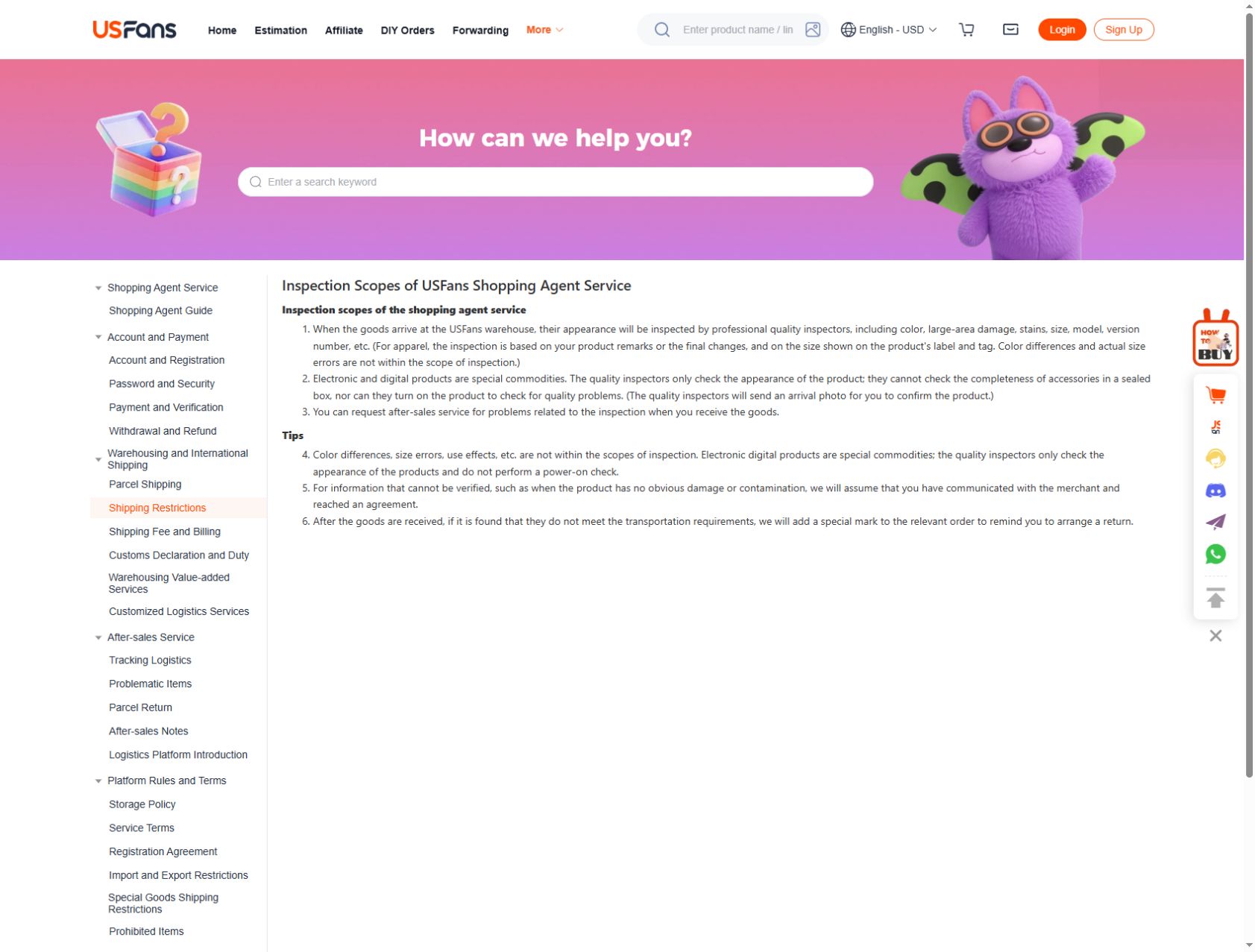
USFans' inspection policy checked on 30 September 2026 describes appearance and clothing-label checks. Actual size discrepancies and use performance are outside that scope; electronic products are not powered on for testing. A correct label therefore does not settle a question about sleeve length, and an exterior photo does not establish that a device works.
For the hypothetical crewneck, a visible size label and a garment measurement answer different questions. If the deciding detail is missing, ask whether it can be checked. The QC photos guide helps identify what a photograph supports without inventing hidden properties.
Resolve the item decision before building the parcel
Keep an unresolved item distinguishable from those you have decided to send. If you want a correction or return, check the conditions and available action for that specific item and stage. Do not infer the same outcome from somebody else's order. The returns guide addresses that decision.
For items you are keeping, review packing choices against the actual contents. Removing packaging can change protection or presentation; adding it can affect size and weight. Neither choice is universally preferable.
Make sure the parcel list reflects the items you now intend to include. If you removed the cap from the hypothetical parcel, a quotation based on the earlier contents needs another look. A plan change should update the relevant calculation, not merely the label on your list.
Compare transport using the parcel you will send
Check destination, contents, packed measurements, service conditions and charge scope together. The shipping calculator guide explains the inputs; the shipping guide addresses the service comparison.
Keep estimates distinguishable from the later proposal for the actual parcel. Do not transfer a charge or delivery expectation from a different route just because the products look similar. If timing matters, separate purchasing, warehouse handling and carrier movement rather than treating them as one promised interval.
Confirm the relevant amount and operation before paying for transport. Retain the parcel reference afterward; the original product link cannot report its delivery progress.
After dispatch, follow events rather than assumptions
Use the tracking guide to read the parcel's event history and dates. An item reference, order reference and parcel reference may concern different levels of the purchase. Attach a question to the record that can answer it.
On receipt, compare the contents with the parcel you expected. Keep useful records privately and redact personal information before sharing an image. If an issue remains, describe the specific difference instead of posting the entire account history.
The review guide helps interpret other people's experiences of these stages. The safety guide addresses account and payment requests rather than garment choice.
Questions to ask at each transition
| Transition | Question that prevents a mix-up |
|---|---|
| Saved row to request | Is this the exact option and quantity I intend? |
| Requested change to confirmation | Was the change accepted, or only acknowledged? |
| Purchase to inspection | Does this record belong to the received item? |
| Inspection to parcel | Have I decided to send each included item? |
| Parcel to quotation | Does the proposal match these contents and destination? |
| Dispatch to follow-up | Am I asking about the correct parcel and event? |
Frequently asked questions
Can this article place an order for me?
No. It explains the decisions. Product buttons open OG browsing pages, while purchases and private records belong to the relevant service workflow.
Does asking for a size change guarantee it was made?
No. Keep the request separate from its confirmation and inspect the option associated with the affected item.
Should I ship everything together because it was bought together?
Review the actual contents, unresolved issues and available proposals. A shared purchase date does not settle the best parcel choice.
Is a warehouse image proof that I received the final parcel?
No. It concerns an earlier stage. Keep receipt and delivery observations attached to the event they actually show.