
USFans Shipping: Recompare the Quote When the Parcel Changes
A USFans shipping estimate belongs to a particular parcel plan. If you add a bag, remove a garment, change the packaging or use a different destination, the earlier amount may no longer describe the purchase you intend to send. Keep the quote attached to its inputs rather than remembering only the lowest number.
Start with the purchase guide if the goods have not yet been ordered. Compare transport proposals only after identifying the contents and destination; revisit the amount whenever those inputs change.
Describe one parcel before comparing services
Record the destination country and the address details required by the quoting workflow, the actual contents, packed weight and outside dimensions. Keep the date of the proposal as well. Private address details should stay out of public screenshots.
Distinguish a planning estimate from a proposal based on the packed parcel. Item weights alone do not describe all packaging, and an item photograph cannot establish its packed dimensions. The shipping calculator guide addresses the inputs to review.
If one service is quoted for an earlier parcel and another for a revised one, you are changing two variables at once. Recompare both against the same contents and destination before attributing the difference to the service.
Actual weight and volume answer different questions
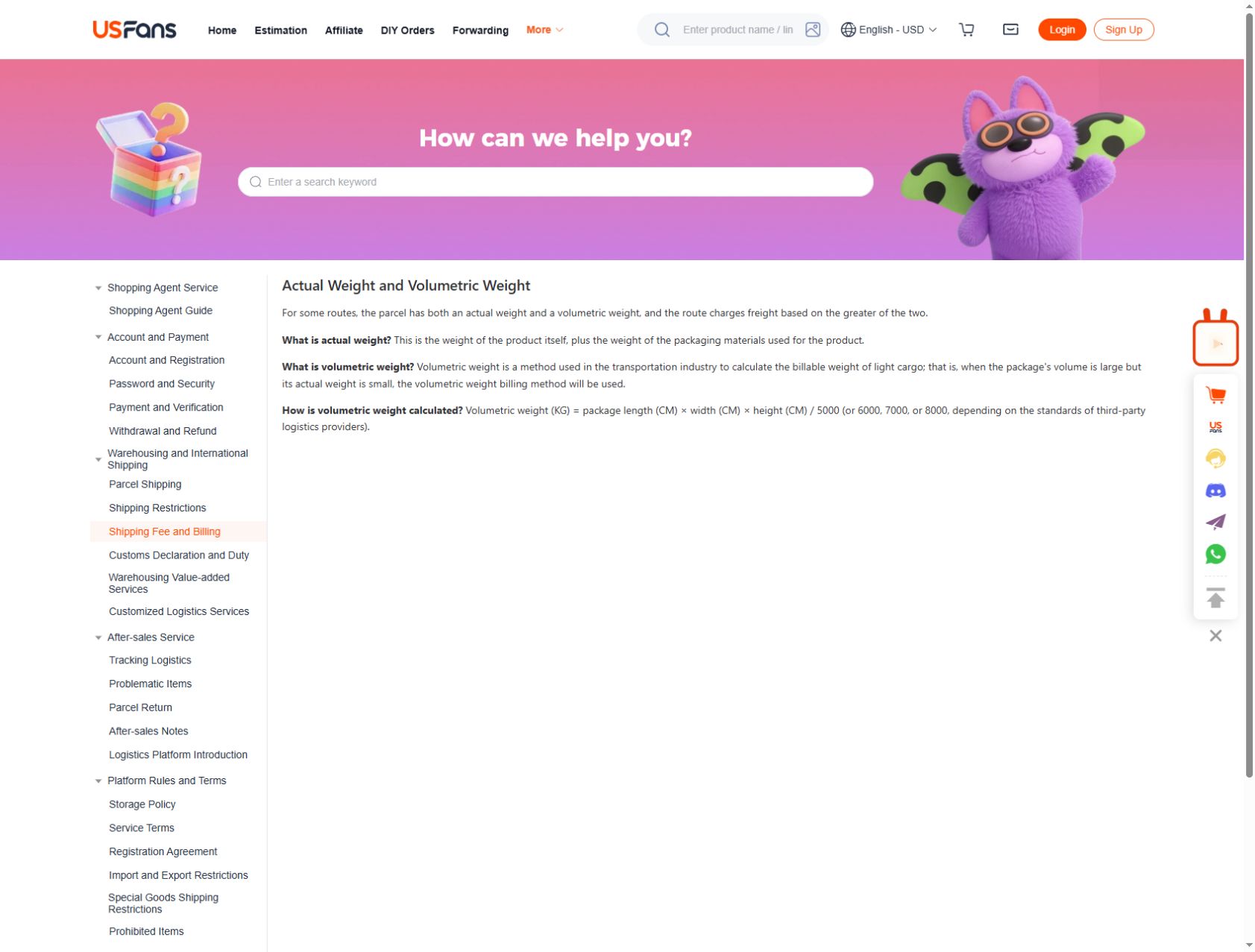
USFans' weight guidance checked on 30 September 2026 defines actual weight as the goods plus their packaging. Some routes charge using the greater of that packed weight and volumetric weight. The divisor depends on the logistics provider: it is not a number to copy from an unrelated route. Check the selected service's calculation, including any rounding or minimum-charge conditions it shows.
For an arithmetic illustration only, assume a service uses centimetres and a divisor of 6,000 and selects the larger weight. A hypothetical box measuring 50 × 30 × 24 cm has a volumetric weight of 6 kg. If its actual weight is 4.5 kg, that comparison produces 6 kg before any other service rules.
If the height becomes 18 cm, the volume calculation becomes 4.5 kg. If actual weight is now 5 kg, the same comparison produces 5 kg—not 4.5 kg. These are invented inputs to explain the calculation, not a USFans quotation or a saving achieved on a real parcel.
Packaging changes should serve the contents
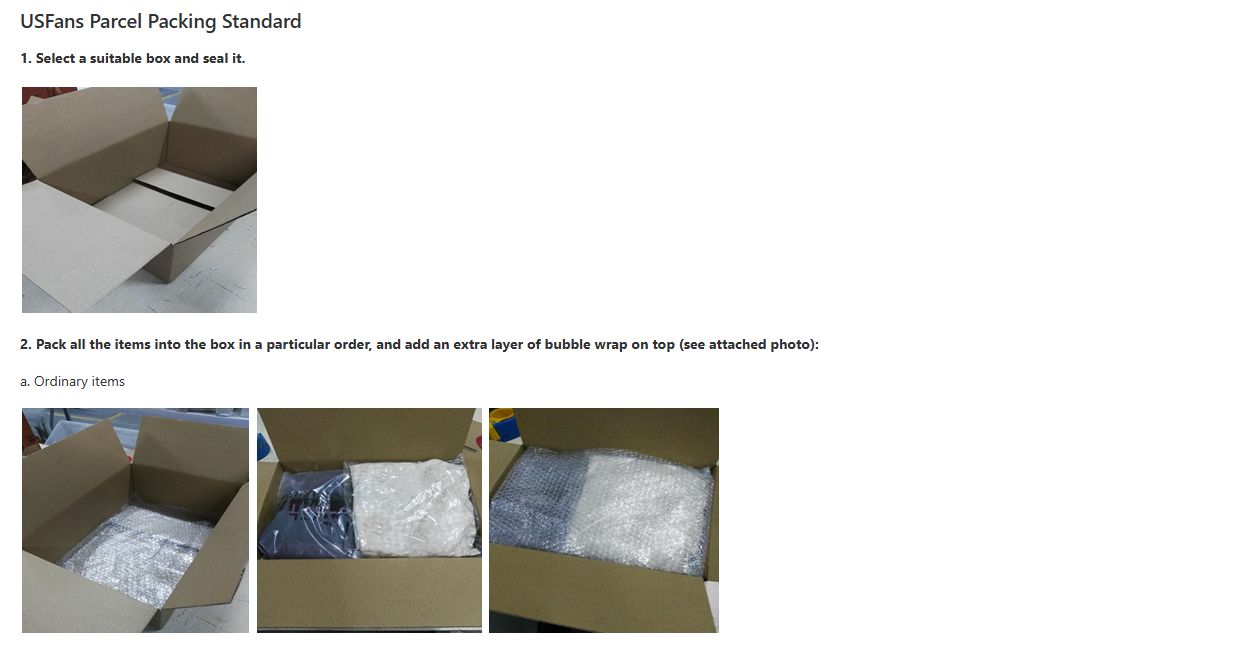
A smaller parcel may change the volume calculation, but size is not the only consideration. Removing packaging can alter protection or presentation; keeping it can affect weight and dimensions. Establish what remains around the actual items before choosing a packing instruction.
If a bag is part of your plan, inspect this backpack on USFans and decide which compartments and shape you need to protect. Obtain the resulting packed dimensions separately before adding it to a shipping comparison.
Use the warehouse guide to keep received items and packing decisions together. If an item is awaiting clarification, decide whether it belongs in the proposed parcel rather than letting an old list make that choice.
Compare the scope of the amount
| Detail | Question to settle |
|---|---|
| Currency | Are the amounts shown in the same currency? |
| Chargeable basis | Which weight and service rule produced the proposal? |
| Included services | What packing or other selected services are included? |
| Destination charges | What does the proposal say about included or separate charges? |
| Offer | Was a reduction actually applied to this operation? |
| Timing | Which stage does the estimate begin with? |
Ask about unclear charge scope instead of assuming that a lower headline amount includes the same things. Do not derive customs or tax treatment from the name of a shipping option. The actual terms for the relevant destination need their own check.
If parcel protection is offered, use the insurance guide to check which event and shipment the terms concern rather than treating the option as a guarantee of every outcome.
The coupon guide separates offer eligibility from an applied reduction. Adding an item to reach a promotion can change the parcel calculation, so review the combined decision rather than the discount alone.
Availability depends on this destination and these contents
A service shown in another user's screenshot is a useful lead, not proof that it accepts your parcel. Verify the contents and destination in the actual proposal. Do not change an item description to hide a characteristic that affects eligibility.
For Argentina, Mexico or another destination, select the actual destination in the quoting workflow and review the options for these contents. A translated guide or a quotation for another country cannot establish the services, price or delivery conditions for your parcel.
Read Spanish, Polish or Latvian guidance in the language you prefer, while keeping language and destination separate.
Delivery time needs a starting event
Time spent waiting for a seller, warehouse preparation and carrier movement are different intervals. A transport estimate should not silently become a promise measured from your first goods payment. If an item is still awaiting dispatch to the warehouse, it has not necessarily begun the international journey described by a later proposal.
Use the delivery-time guide for planning and the tracking guide for events after dispatch. If an event is unclear, ask about the matching parcel rather than applying another buyer's timeline.
Compare a split plan with the whole plan
If you consider sending some items now and others later, compare the complete decision rather than the smaller first payment alone. Keep each proposed parcel's contents, destination, packing and charge scope visible. A quote for the first parcel does not include the second merely because both came from the same purchase list.
For example, in a hypothetical plan you might send a crewneck now and leave a bag in the warehouse. Compare the proposal for sending both with the separate proposals for the two parcels, if suitable services are actually available. Keep any unresolved storage or later packing conditions separate. Do not call splitting cheaper from the first parcel's amount alone, and do not assume consolidation always saves money.
An early estimate for a later parcel is still an estimate. Label its date and assumptions so you can revisit the comparison before committing to that second shipment.
Check the final proposal before payment
Revisit the proposal after a change to contents, packaging, measurements, destination or selected service. Confirm the current operation and amount before authorizing payment. Retain the proposal context privately so a later question can identify what was agreed.
If the payment outcome is unclear, consult payment problems before repeating it. A second payment is not a way to verify the first.
Frequently asked questions
Does a lighter parcel always cost less?
Not necessarily. The applicable calculation can depend on volume and other service conditions. Compare the actual proposals for the revised parcel.
Can I use a quote from last month?
Use it as historical context, not as a current commitment. Recheck the inputs and available proposal before deciding.
Is the cheapest option automatically the best?
Only compare options that meet the actual contents, destination and required conditions. A low amount alone does not establish suitability.
For fragrance bottles, use the perfume planning guide to separate the selected bottle and quantity from item-specific transport acceptance before comparing prices.
Does the example give a real price?
No. It illustrates weights with hypothetical inputs; no currency amount or real shipping outcome is supplied.
Does USFans ship to Hong Kong?
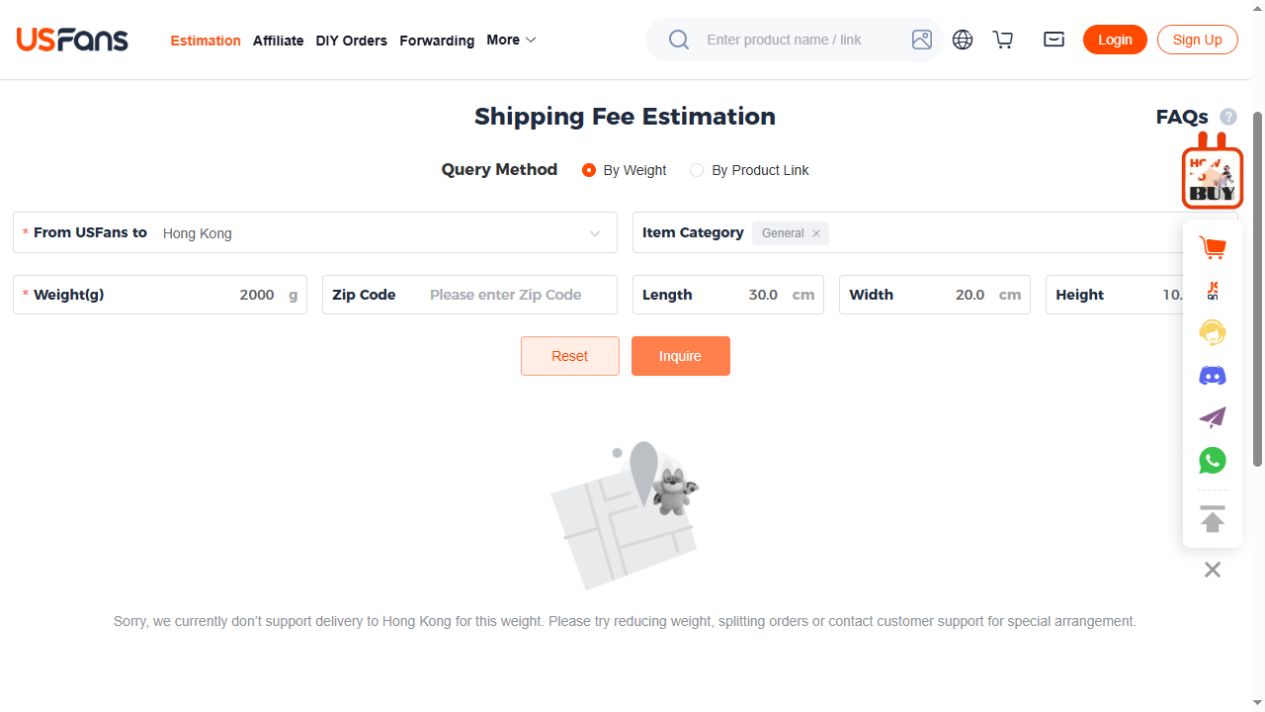
The public estimator returned no service for the following Hong Kong example on 1 October 2026.
| Input | Tested value |
|---|---|
| Contents | General clothing |
| Weight | 2,000 g |
| Size | 30 × 20 × 10 cm |
| Postal code | Not entered |
For a bag or backpack, use the relevant contents category and actual packing information. This general-clothing test did not produce a Hong Kong service to compare.
For destination-specific examples, see Mexico and Argentina in the Spanish shipping guide.