
USFans Coupon: Check the Saving After the Basket Changes
A USFans coupon is useful only when its conditions match the operation you intend to make. A code shared in a post, an invitation benefit and a reduction visible on a parcel proposal may concern different stages. Start by identifying which amount the offer is supposed to change.
Budget from the amount payable for your actual selection. Keep an advertised benefit separate until its conditions match your operation and the reduction appears in the resulting total.
An ended promotion still visible on 1 October 2026
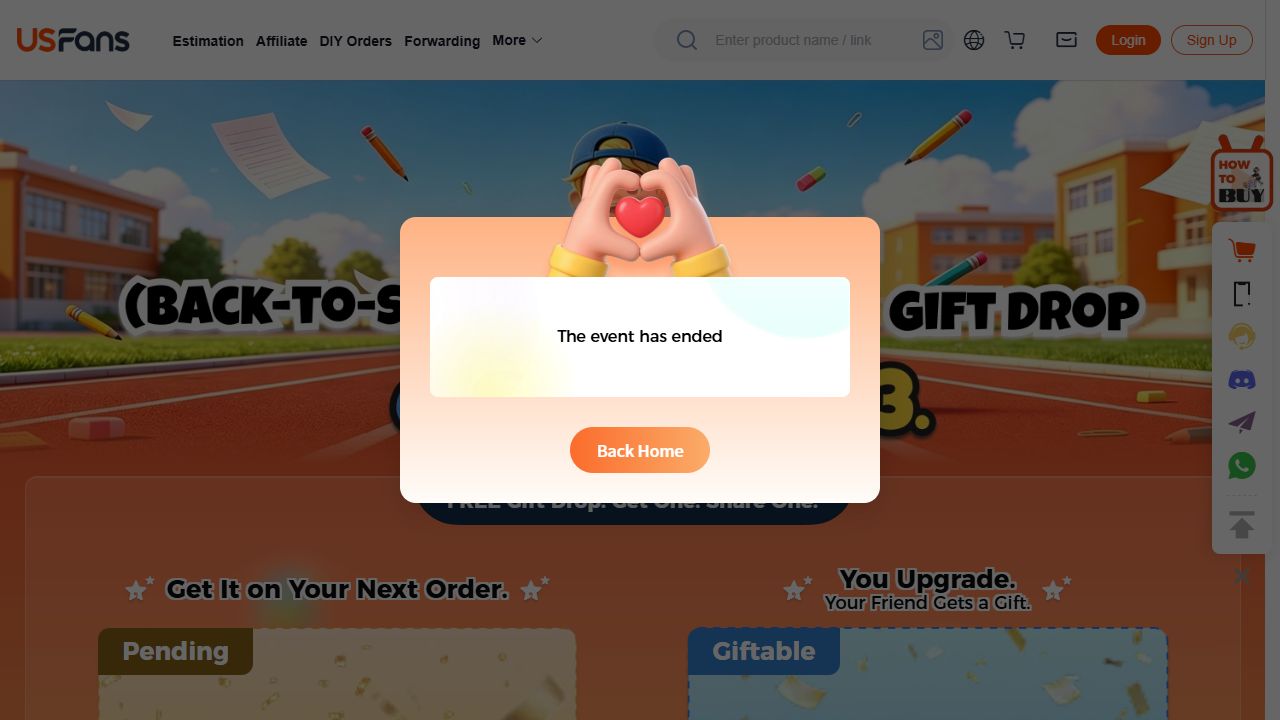
USFans' Back-to-School page was still reachable on 1 October 2026, but a prominent message marked the event as ended. Its gift banner is therefore a useful warning against budgeting from an old promotion. Check a different offer's own status before changing the purchase to qualify for it.
Identify the offer before changing the purchase
Keep the exact wording, source and date of the offer. Check whether it concerns goods, transport or another stated benefit. A USFans shipping coupon should not be assumed to reduce the earlier product payment; an invitation code does not by itself establish what will be available at a later checkout.
Read account eligibility, item or service restrictions, minimum spend and expiry where supplied. If a time zone is missing, do not silently assign one when timing matters. An old post remaining visible does not renew the offer.
Compare the same basket before and after
| Detail | What should stay clear |
|---|---|
| Selected items | Same options and quantities for a direct comparison |
| Currency | Same currency and interpretation of displayed amounts |
| Stage | Goods payment or the relevant parcel operation |
| Reduction | The line or amount actually changed |
| Other charges | Anything included, separate or newly selected |
| Result | The message and total shown after the attempt |
Changing the basket at the same time as applying a code makes the effect harder to interpret. If you add an item to meet a threshold, you have a new purchase decision, not simply the same purchase at a lower price.
The payments guide separates transaction scope. For a changed parcel, use the shipping calculator guide to revisit the relevant inputs.
A threshold can change the decision more than the discount
Imagine a hypothetical shortlist with one crewneck. You consider adding a bag solely because an offer describes a minimum spend. The added item changes what you buy and may change the later parcel plan. Whether the offer is attractive depends on the revised total and your actual need, not just a percentage in the promotion.
Inspect a hoodie candidate on USFans if it fits your clothing plans, checking the selected option before adding it to a basket. It is a separate candidate from the hypothetical crewneck above. Assess any offer against the actual purchase total; this product link does not apply a coupon or establish a discounted price.
Compare the intended purchase without the extra item against the revised purchase on its own terms. Do not call the difference a saving if it depends on ignoring the added cost.
For an arithmetic-only illustration, suppose the original basket costs 72 units of one currency, an extra item adds 18, and the hypothetical offer deducts 8. The revised goods total is 82, which is 10 more than the original basket. The deduction is real within the example, but buying the added item does not reduce the original outlay. These are invented comparison inputs, not USFans prices, a live offer or an estimate of delivery charges.
Compare multiple offers without assuming they combine
If you have several USFans coupons to evaluate, keep each offer's conditions beside its own result. Do not add advertised reductions together unless the actual operation confirms they can be used together. A goods reduction and a later shipping benefit may concern different totals, and one may not be available for the service you eventually select.
Compare one eligible offer against the same unchanged operation, then compare the alternative on the same basis. If selecting the second removes the first, use the resulting payable amount rather than the sum of both advertised benefits. Keep unconfirmed later benefits outside the saving you are relying on now.
If a product or quantity changes after a reduction appears, inspect the total again before payment. The earlier result describes the earlier basket. An accepted code does not freeze every later price or establish that a minimum spend still applies in the same way.
A rejected code does not always mean an expired code
Read the exact response. It may concern the stage, account, minimum amount, selected service or another condition. Do not replace that wording with a diagnosis you cannot establish. Check spelling and the offer's stated context without repeatedly submitting unrelated transactions.
If the reason is unclear, keep the relevant conditions and response for a private support request. Do not share credentials or an entire account screen with someone who claims they can activate the offer for you.
The safety guide addresses unexpected requests. An offer that seems attractive does not establish the identity of the person sending it.
A claimed benefit is not an applied reduction
Distinguish seeing an offer, claiming it, selecting it for an operation and observing the resulting amount. These are different events. A message saying a benefit is available does not necessarily show that the current total includes it.
Before authorizing the transaction, read the current payable amount and its scope. If the result later becomes unclear, use the payment-failed guide before repeating the operation. A coupon test should not become an accidental duplicate purchase.
Keep historical promotions in their original context
An old successful redemption can show what happened for that account and operation at that time. It does not establish present availability for everyone. The archive guide explains how to keep dates and earlier observations from being overwritten by current assumptions.
Likewise, a review mentioning a discount may omit eligibility or other charges. Use the review guide to identify the scope of the account rather than transferring its result to your basket.
Frequently asked questions
When can I count a USFans code as a saving?
When it applies to your intended operation and changes the amount payable for that selection. A code copied from an old post or another account does not establish that result for you.
Is an invitation code the same as a shipping coupon?
Do not assume that. Read the particular benefit, eligibility and redemption stage described by the current offer.
Should I add products to reach a minimum spend?
Compare the revised purchase with what you actually wanted, including the later parcel implications. The threshold alone does not make the extra purchase worthwhile.
What should I keep when an offer fails?
Keep the offer conditions, operation, relevant selected contents, date and exact response privately. Avoid publishing account identifiers or payment details.