
USFans Size Guide: Recheck the Measurements After Changing a Size
A size change should answer a fit question, not simply replace one letter with another. Before choosing a larger or smaller option from a USFans find, identify which dimension needs to change and whether the new option actually provides that difference.
The relevant chart belongs to the exact product and version, not to the USFans name. Compare measurements taken in the same way. Start with the spreadsheet collection for product families or the purchase guide if you are already preparing a request.
Choose a reference garment for the intended use
Use something you already wear in the way you want to wear the candidate. A top used alone and a layer worn over another garment may call for different preferences. Note what you like and what you want to change: body length, width, sleeve reach or room at a particular point.
Do not copy another person's size recommendation without its context. Their height and preferred fit do not supply the dimensions of the garment you are comparing. A label can identify an option but cannot define all its measurements.
Establish the measurement definition first
| Measurement question | Definition to check |
|---|---|
| Chest or body width | Is it a flat garment width or a circumference? |
| Garment length | Which upper point and lower edge are used? |
| Sleeve | Does measurement begin at the shoulder or another point? |
| Waist | Is the garment measured relaxed, stretched or by body sizing? |
| Trouser length | Is the value inseam, outer length or another definition? |
Units and endpoints matter together. Converting a number from inches to centimetres does not resolve a different measuring method. If a chart does not explain what a value represents, ask before treating it as comparable.
For a flat reference garment, avoid deliberately stretching it unless the requested method calls for that. Use the same approach for the relevant comparison and record the definition with the value. A photograph of a ruler is useful only when its placement and endpoints are visible enough to interpret.
Read changes across the actual chart
Imagine a hypothetical chart where the option you first considered has a defined flat width of 54 cm and the next option has 56 cm. The difference in that stated measurement is 2 cm. That does not establish the sleeve or body-length change, and it does not by itself predict your comfort.
If sleeve reach is your concern, inspect that row of the chart too. Do not assume every dimension changes by the same amount. These numbers illustrate chart reading; they are not dimensions of a listed USFans or OG product.
Inspect a hoodie candidate on USFans as a separate option for your planned layers. Compare its own chart and selected size rather than applying the hypothetical 54 cm and 56 cm values above. When replacing a crewneck with a hoodie, check the hood's place beneath your outer layer as well as the body and sleeve measurements; the same chest width does not settle that difference.
A changed option needs a fresh comparison
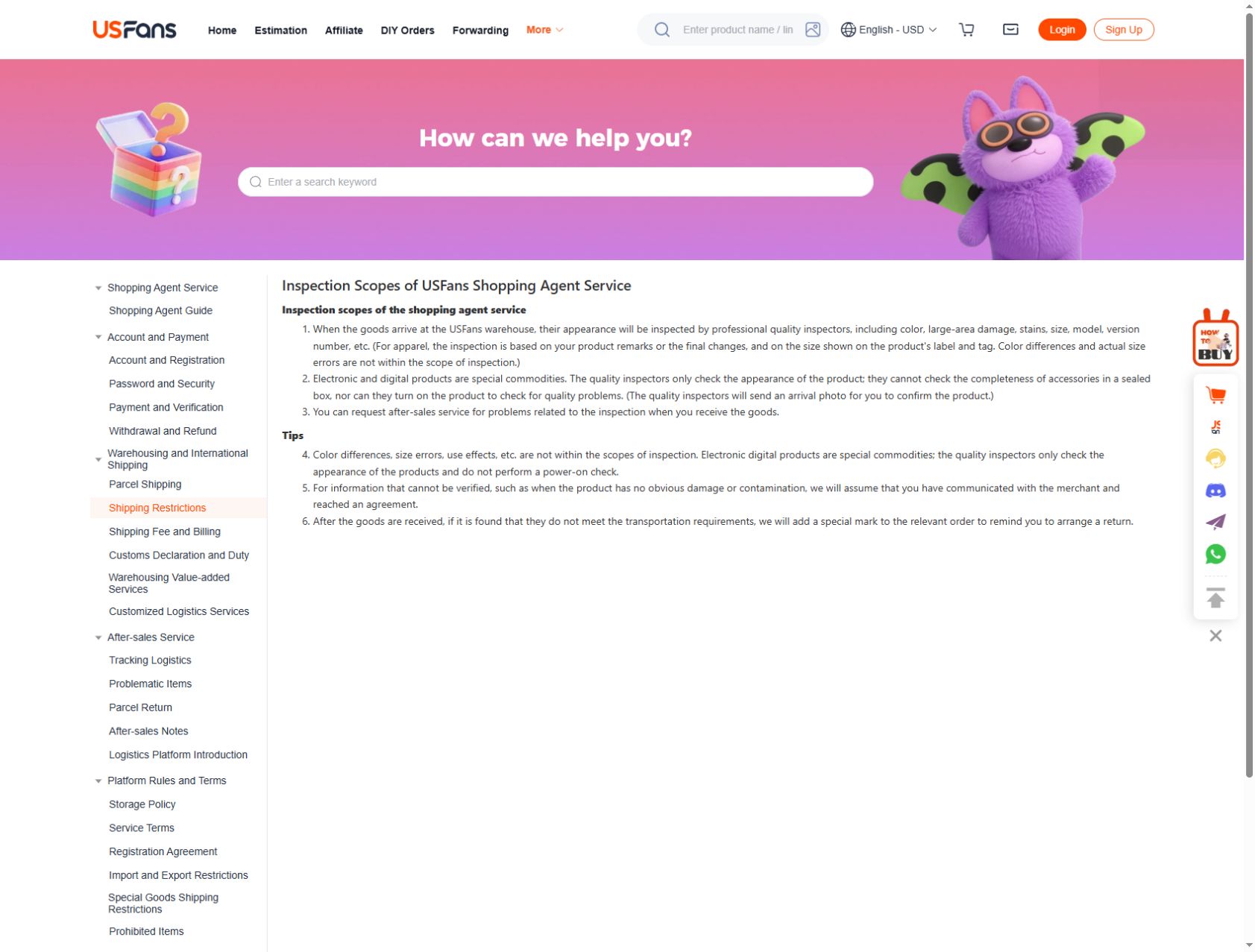
Keep the original choice and the later confirmed option distinct. If you asked to change a size, establish whether that request was accepted before evaluating the received label. An unanswered request should not be treated as a completed correction.
When the item arrives, connect any measurement or label photograph to that received item. The QC guide explains the difference between a visible label and a measurement. A picture from a different option cannot settle the fit of this one.
If the result differs from the agreed selection, ask platform support to ask about that mismatch. If the label matches but the fit information is inadequate, describe the missing measurement instead of assuming the wrong item was sent.
The USFans inspection policy checked on 30 September 2026 uses the clothing label and applicable order remarks or agreed changes; actual size errors and colour differences are outside that inspection scope. After a confirmed size change, check the received label against that change, then address any remaining dimension question with a separately defined measurement.
Check each part of a set
A coordinated set can create two fit decisions. Confirm which pieces the purchase unit includes, whether a single size applies to all of them and what measurements are available for each piece. A top that matches your preference does not establish that the bottoms will do the same.
The sets guide addresses included pieces. For separate garment questions, continue with T-shirts, hoodies and sweaters, jackets or pants and shorts.
Do not infer missing pieces from styling props in a gallery. A pictured belt, bag or underlayer may be separate from the selected purchase unit.
Footwear and headwear need their own definitions
For shoes, identify the size system and the exact model's available guidance. A conversion label from a different product is not enough to settle fit. Use the shoe guide for the relevant comparison rather than applying garment rules.
For headwear, examine the stated size definition and adjustment information for the selected construction. A photograph of a cap does not establish an adjustment range. Continue with the headwear guide if that is the product you are choosing.
Know what a size check leaves unanswered
Measurements can support a comparison, but they do not establish fabric feel, movement comfort, stretch recovery or how an item behaves after washing. A product note or review about those properties needs its own context. The review guide helps keep another person's experience attached to their item and use.
If a decisive detail cannot be established, reconsider the candidate or ask whether a suitable check is available. Do not invent a tolerance or choose a size solely because it makes an incomplete chart look settled. Check any available return conditions before relying on a later remedy; the returns guide explains that separate decision.
Frequently asked questions
Should I always size up?
No universal rule follows from the platform name. Compare the exact chart and your intended fit before changing the selection.
Can I use the chart from a similar-looking item?
It may suggest which questions to ask, but it does not establish this item's dimensions. Keep the sources separate.
Is doubling flat width enough to predict fit?
It describes an arithmetic relationship, not a complete fit assessment. Confirm the measurement definition and consider the other relevant dimensions and construction.
Does a correct size label mean the garment will fit?
It identifies the labelled option. The actual dimensions and your preferences remain separate questions.