
USFans Women Finds: Compare the Garment, Not a Shared Size Label
A USFans women shortlist should describe the clothes you want to wear, not simply group products under a broad label. Begin with the garment, cut and occasion: a fitted top, a looser layer, trousers of a particular rise or a dress with a specific length. Those choices determine which measurements and details deserve attention.
A product labelled women's, men's or unisex still needs its own comparison. The label does not tell you how a selected garment will fit, whether its proportions suit your preference or what is included in the purchase.
Start with the dimension that matters to the garment
For a fitted top or dress, read how the listing describes relevant bust, waist, hip and length measurements. Establish whether these are body recommendations or measurements of the garment. Do not combine a body circumference with a flat width as though they were equivalent figures.
For trousers, compare rise and leg length as well as waist and hip information. For a loose top, check whether the shoulder and body proportions match the silhouette you want. A number or letter used by another listing is not a conversion guarantee.
The size guide helps organise consistent units and endpoints. If an important dimension is missing, ask about it rather than estimating from the model's pose.
Distinguish an adjustment from a different cut
Imagine a hypothetical shortlist where a relaxed top replaces a fitted one. Ordering a smaller size does not necessarily make the new design equivalent to the original. Its shoulder placement, armhole or length may still describe a different silhouette.
Likewise, changing a trouser size is not the same as selecting a different rise or leg shape. Use the pants and shorts guide to compare those features separately. For a top worn beneath a jacket, check both layers instead of assuming matching size labels mean they work together.
Keep the reason for the choice beside your spreadsheet entry. That makes a replacement understandable: you selected another cut because it met a requirement, not because it happened to look similar in a thumbnail.
Read details that a styled photograph can hide
Check the selected colour, length, sleeve option and any version wording. For a dress or top, determine whether a pictured belt, camisole or other layer is actually included. For a coordinated outfit, use the sets guide to identify the individual pieces before comparing totals.
Read what the listing says about lining, closures and adjustable elements where those matter to you. Do not infer opacity, stretch or comfort from the appearance of fabric in a photograph. A visible drawstring or strap does not establish every adjustment available or the effect on fit.
For a T-shirt, a jacket or a sweater, use the garment-specific guide rather than forcing every item into one checklist.
Keep the selected version through a change
If you switch from a short version to a longer one, or from one colour to another, check whether the chart and included details still apply. Preserve the actual selection, not a generic image showing several options.
If the change occurs after purchase, find the response confirming what was accepted. An unanswered request for another size does not establish that the order was changed. Compare the received item with the accepted selection before describing a mismatch.
Use the archive when retaining the original candidate helps explain the decision. Avoid saving the new link next to a description and image that still belong to the previous version.
Ask for an inspection that resolves a real concern
An overall view can help compare the selected design, while a label view can help identify the stated size. If a particular length or width is unresolved, specify the measurement and endpoints. A photograph of a label alone does not measure the garment.
For a visible issue, name the area and keep enough context in the image to identify it. The QC guide explains why a close-up should not be stretched into a conclusion about fit, wear or fabric performance.
Do not use private body photographs or identifying order records as public proof. A garment-only comparison can often explain the question without exposing the wearer or their account details.
Resolve the item before styling the whole parcel
If a garment needs clarification, keep that decision separate from the rest of the outfit. A suitable jacket does not resolve a sizing concern with the dress or trousers underneath it. Use a focused support request for the affected item.
Read the returns guide before approving alterations or removing tags while a remedy is being considered. Once the contents are settled, use the haul guide to review the actual parcel rather than the original outfit plan.
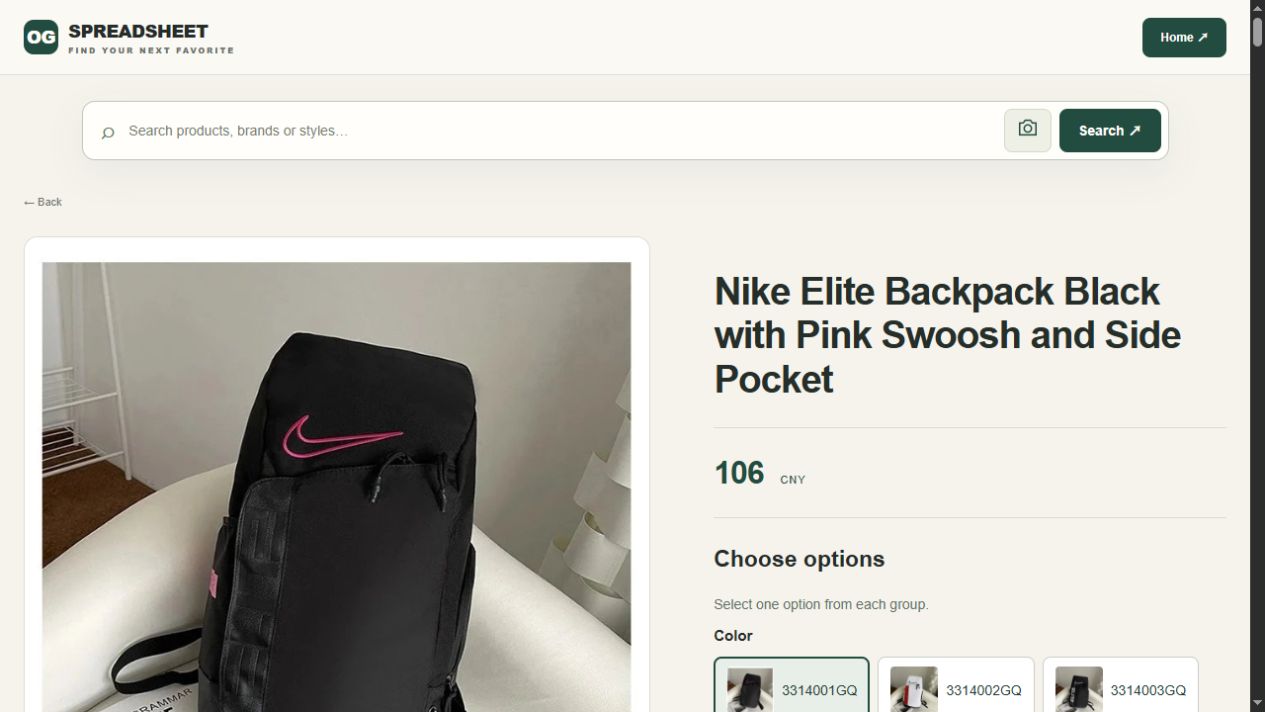
If the outfit also needs a bag, inspect a backpack candidate on USFans as a separate accessory comparison. This is not presented as a women's garment or a fit-tested recommendation. Check its current dimensions and contents for your own intended use.
Frequently asked questions
Can I use the same size across women's and unisex listings?
Compare each relevant chart and measurement method. A shared label does not establish the same dimensions or cut.
Does a model photograph show the length I will get?
Use the selected version and stated measurement method. Styling and perspective do not provide a reliable measurement for your own comparison.
Should I choose a smaller size to make a relaxed cut fitted?
Recheck the design and full chart first. Changing size may not produce the silhouette you originally intended.